When managing shoulder injuries - whether it's an acute injury or an ongoing issue - one area we always assess is the rotator cuff.
Rotator cuff strength plays an important role in almost every movement of the shoulder. While the rotator cuff contributes to force production, its strength is also essential for providing dynamic stability and controlling the shoulder as we move.
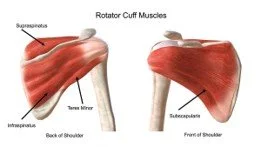
Rotator Cuff Musculature
When assessing a shoulder injury, looking at rotator cuff strength provides a valuable insight into how well the shoulder is functioning and its capacity to handle load and movement. We assess not only the strength of individual rotator cuff muscles, but also the ratio of strength between them as this can help to identify deficits in both the force production and stabilising role of these muscles that may contribute to pain and instability.
Strength testing is an important part of managing shoulder injuries, as progressive strengthening has been shown to be one of the most effective ways to manage rotator cuff-related shoulder pain (Zhang et al., 2025). Testing helps us identify where strength deficits may be contributing to your symptoms and, importantly, gives us a clearer idea of which areas to target with your rehabilitation
How do we test rotator cuff?
Our usual assessment of rotator cuff strength involves measuring internal rotation (IR) and external rotation (ER) strength using objective dynamometry.
Internal rotation: Assesses the strength of the internal rotators, including the subscapularis, alongside the contribution of the larger muscles involved in internal rotation.
External rotation: Assesses the strength of the posterior rotator cuff, particularly the infraspinatus and teres minor.
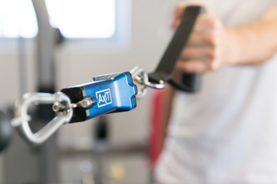
We look at the maximum strength produced, the difference between sides and the ratio between internal and external rotation strength. Research using hand-held dynamometry has reported external-to-internal rotation strength ratios broadly around 86–99%, although this changes depending on the testing position and population.
We can also test the shoulder at different levels of abduction, most commonly with the arm by the side (0° abduction) and with the arm elevated to 90° abduction.
0° abduction: Generally places less demand on the shoulder and is often appropriate when someone is in the early stages of rehabilitation, has significant pain or has limited shoulder movement.
90° abduction: Places the shoulder in a more demanding position that is closer to how the rotator cuff works during overhead movements, giving us a better idea of how the shoulder handles higher demands and is particularly useful for return to sport testing
Which position we test in depends on the individual's pain, injury and current strength. As strength improves, we can gradually move from lower-demand testing positions towards more challenging positions by increasing the angle of shoulder abduction.
We also commonly use the Athletic Shoulder (ASH) Test, which measures isometric force production and rate of force development (RFD) in positions relevant to overhead activities. This is particularly useful for athletes, as it provides information about the shoulder's ability to produce force in different overhead positions and can further help guide decisions around returning to the gym, work or sport.
Using Strength Testing to Guide Rehabilitation
Whether you're rehabbing an acute shoulder injury or managing an ongoing issue, rebuilding strength is the cornerstone of any shoulder rehab.
Objectively measuring strength provides useful information throughout the rehabilitation process. It allows us to:
Identify potential strength deficits that may be contributing to pain, instability or general function
Establish a baseline to measure progress against and track changes in strength
Identify specific areas that may require additional focus.
Adjust exercises and loading based on individual strength deficits.
Help determine whether the shoulder is ready to return to higher-level activities.
We use objective strength testing alongside our clinical and subjective assessments to help guide your rehab. It gives us a clear idea of how your shoulder is performing, whether your rehab is working, and whether you've built up enough strength to handle the demands of what you’re trying to get back to.
Article Written By Alex Di Sano